Tag: PO-33

  • DAWless music production – a tactile experience

    Have you ever thought about what makes DAWless music production different? For me “tactile” was one of the first ones coming to my mind. But there are some more. Let’s explore them.

    DAWless music production differences

    I have already posted a little guide on DAWless music production and given some more tips later, let’s not spend more time on that topic.

    The reason why I post about this topic is about touching, turning on and off, pushing, swiping, swinging, and all the other things one can easily do while being DAWless.

    It has been years now since I continuously used PO-33 KO, a simple and budget DAWless instrument. Technically a little sampler that offers me a kind of on-the-go music production experience.

    And I enjoy taking it with me, jamming then recording it. Imperfect but on-the-spot sketches, which is like drawing with music to me. I often record some noises around and implement them in the beat.

    Difference to MIDI-based instruments – though both tactile

    Putting it simply: with DAWless you can leave for the moment. MIDI instruments (I use many including both pads and keys) are also tactile but in a sterile environment. As stated above, a DAWless can be easily and effortlessly taken outside. And it subsequently boosts one’s creativity as well.

    Despite being tactile, MIDI instruments are built for in-house use only. Let alone you are to have a laptop as well round the clock to enjoy the full potential.

    Mobile applications – not so tactile

    On the other, if only mobility matters, you may choose to use your phone only, right? It is. I use Koala Sampler a lot for this purpose. My smartphone is with me around the clock, so why not fully benefit from it?

    Even more, from time to time I think about buying a tablet again (I was a happy owner of the old Nexus 7 2013) to produce more beats.

    What makes a huge difference here is the lack of any button or slider or anything to boost the production process.

    Limitations of DAWlessness

    The downside of this music production is simply the mass amount of limitations. Most samplers have their own workflow that is often least intuitive to DAWs. Which requires much more time to own and master.

    Furthermore, you need to prepare your sampler for your journey, to have enough (and good) samples and instruments recorded in order to jam.

    Many can save a limited amount of patterns and flows, so you need tools as well (minimum your phone and some cables) to record them. I mean, some can store the recorded sessions easily, but then you are going up with the price pretty fast.

    And lastly price. We all die of owning a dope MPC, or SP404, but take your time thinking of your dedication before purchasing one. On the other hand, cheaper ones have more limitations in every aspect.

    All-in-all they are fun to use and a beautiful way for expressing your musical ideas for your audience. An imperfect but cool way. As stated above, to me producing DAWless is like sketching. I enjoy the touch of the gadget, the tactile-ness so to speak. I embrace the limitations of it and ultimately: live for that moment.

    dawless music production tactile
  • The Pocket Operator 33 Is A Great Tool for Musicians, DJs And More!

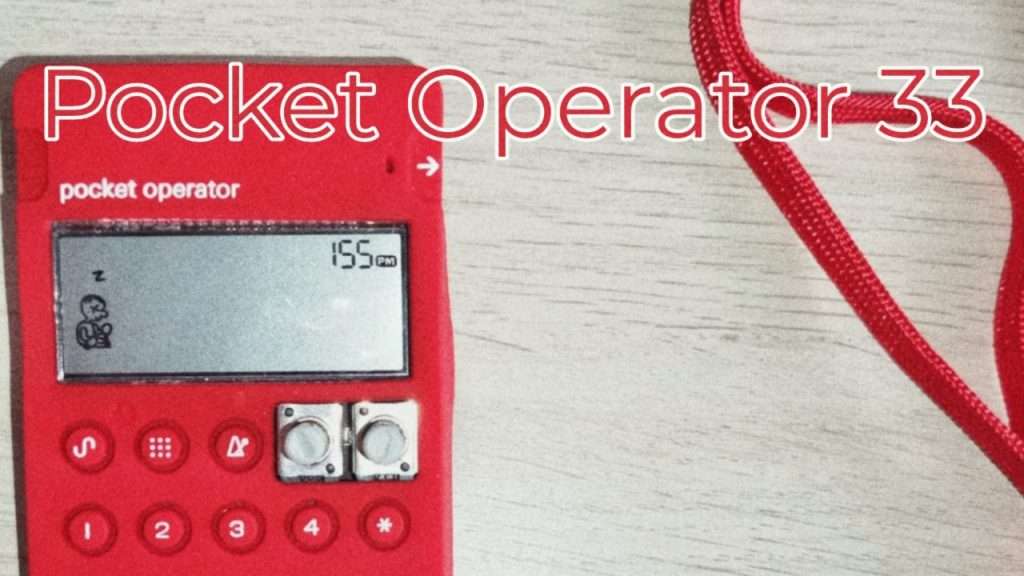
    Okay, first question is: what the hell is Pocket Operator 33? Scroll below, find my one and only PO-33 KO photo below. A bit lo-fi photo, but please deal with it. I created this article away from the PO-33 on a business trip.

    In short Pocket Operator 33 is a budget sampler offering 40 seconds of record time. Available both for sampling as melodic instrument and as a drum.

    Pocket Operator 33

    What are the features of the Pocket Operator 33?

    The pocket operators are all designed with three buttons on top. Each one for a function. You can use them as a sequencer, a mixer, or even a drum machine quite easily. It will take some days to crack how things are working, but luckily I will share some videos and links below.

    Why should I buy one?

    I’m not saying you should. Nor try to promote the brand. This is not a paid article, I am not associated with the company. On the other hand, if you’re looking for a new toy, the pocket operator is perfect for you.

    It’s small enough to fit into any bag or pocket, so you can take it anywhere. You can record your beats with your phone easily and if you add a notebook, you can write down the notes if you wish to work on the beat later. Furthermore you can record field noise to add some ambience to your songs.

    How do you use a Pocket Operator 33?

    There are tons of different uses for these pocket operators. You can:
    – Play along with songs by using the buttons to trigger notes
    – Make beats by triggering drums – perfect for lo-fi jamming
    – Create loops by triggering samples – mind the tempo, though
    – Record vocals – if you are in a quite environment

    And much more. Let me show a video below how I am recording my beats.

    If you got into the vibe, check my complete guide on how to use Pocket Operator 33.

    How much does it cost?

    Generally 99 USD on Amazon. Probably the safest place to grab your first one. Or check local instrument shops around you, they might have a few on stock.

    Where can I find more information about PO-33?

    If you liked this little article, do not miss my in-depth review and ultimate user guide here.

    I also created a playlist with my Pocket Operator 33 songs. All were recorded live, so check my performances here.

    Furthermore check my Discography, I have tons of releases already that were (partially or fully) produced on the legendary Pocket Operator 33.

    Stock Stories was my first ever PO-33 KO beat. A fully experimental release, while I was learning about the gadget.

    My first full album on Pocket Operator 33

    Wabi-Sabi, the best way to express and embrace imperfection. Set of easy to listen lo-fi beats with a hint of oriental chill.

    Taking the Pocket Operator 33 with me on a trip

    Aka Travellers album. An album with 3 years of production time, tons of B-side songs and much more.

    A coffee in Tokyo?

    Café Tokyo is a true lo-fi EP sampling lots of chill vibe samples to offer the listener a true Far East vibe.

    Pokémon and Pocket Operator 33

    If I am not travelling physically, I do travel in my bed. I play a lot with Pokémon and travel to those magnificent places such as Kanto or Alola. Sometimes I compose beats inspired by the game. And there were some cases when I used my PO-33 KO: Ruby, Sapphire, Ultra Moon and Ultra Sun.

    Misc. EPs with PO-33

    Lastly, I wish to mention some releases I worked on with PO-33. Urban Lo-fi, my first lo-fi house release. City Lo-fi, the second one. Finally, Cowboy Gospel. A space ambient but lo-fi chill EP inspired by Cowboy Bebop series first episode.

    Hint: more to come~

  • [Album #22] Ruby

    New lo-fi album Ruby is out and loud. Inspired by retro video game, produced with PO-33 KO and Koala Sampler.

    In the past months I worked hard finishing a lo-fi concept album, the second half of Sapphire. It took me some time as I decided to add a bit more to this one. I ended up finishing 15 songs using both PO-33 KO that I have been using since last May. But also implementing Koala Sampler into my production process. At the end here I go with a new mix. I hope you will enjoy it.

    Ruby Tracklist

    Mount Chimney
    Jagged Pass
    Lavaridge
    New Mauville
    Weather Institute
    Four Tree
    Mount Pyre
    Lily Cove
    Mossdeep
    Shoal Cave
    Seafloor Cavern
    Soot-o-Polis
    Cave of Origin
    Pacific Gold
    Ever Grande

    Click on any of the links above, a new window will pop-up in YouTube with the song. The songs are following the journey of the old Pokémon game, after Sapphire album. So continue the journey and re-live those magnificent places with my lo-fi beats. Kindly note, that I am not sampling the original soundtrack. I compose completely new songs inspired by the different places. Kind of taking them out of my old Game Boy Advance screen and painting them for you on a lo-fi canvas. Very literally. But I hope I was understandable.

    If you are interested in more, like links, story etc. Click on the link above and check Ruby’s page.

    Ruby cover