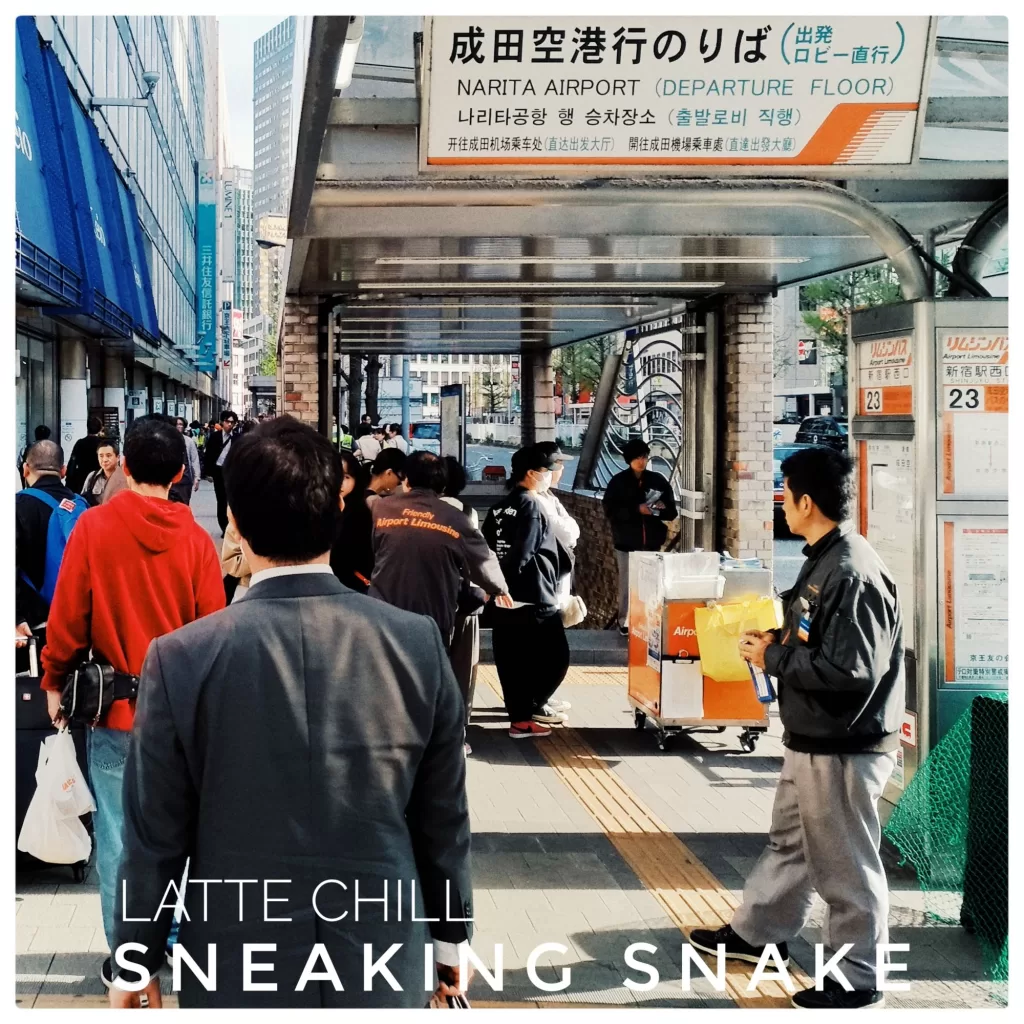
Sneaking Snake single is out to make your day. A lofi hip-hop oriented dope sample beat played along with Viktor Hegedűs but also featuring the raw beat as part of this free single.
Want to get this song quickly? Click on the cover and get to my Bandcamp page!
Also feel free to listen via YouTube below. This is the collaboration version, you will need to download the single for the clean edition.
Bit about Sneaking Snake
This song was one of the first ones where I started experimenting with effects, often used by DJs. I was heavily inspired by attending to a gig of DJ Krush (not the first time of course) in 2022.
DJ Krush is able to create such a mood while playing simple, almost jazzy and chill samples with beats broken and crushed by him live. A great experience.
So, I started experimenting with effects and more. I can’t say I am ready, more like starting a journey but this is why I decided to offer the clean version as well to you. Listen to the raw hip-hop Latte Chill can time-to-time offer.
Avaliable on Moon Festival
The song is part of Moon Festival, a recently released collaboration EP. Click on the link to find all the 4 new songs. I hope you will like the oriental chill inspired mix of beats.
In this article let me cover few tips about lofi photography. Achieving a vintage aesthetic is possible not only through film. You will need to dig a bit into editing with smartphone applications though.
Lofi photography, also known as vintage or retro photography, has gained popularity in recent years thanks to its nostalgic and dreamy aesthetic. What we feel in lofi music, we can feel in photography as well. Of course if you missed the first class and still wonder what lo-fi means, I guess click on the link and start from the basics so we are all on the same page,
Returning to my topic: this style of photography is characterized by a soft, grainy, and desaturated look. It is supposed to mimic the look and feel of old film photographs.
In this article, I’ll explore some of the best techniques and tips for creating lofi photography and achieving a vintage aesthetic with editing, and smartphone applications.
Shoot with film
Obviously the most authentic way would be to achieve a lofi aesthetic in your photography is to shoot with film. Film photography is experiencing a reborn in popularity as photographers rediscover the beauty and depth of the medium.
On one hand shooting with film allows you to capture a unique and distinctive look that cannot be hardly (and not fully) replicated with digital cameras or editing software.
That grain, texture, and color shifts of film can create a sense of nostalgia and warmth that is difficult to achieve through other methods.
On the other hand it is pretty tough – unlike digital camera, with film you cannot shoot indefinite, have to learn catching the right moment. Furthermore it can be quite expensive (on top the camera buying the films, process them once finished, then scan the photos). Long story short, this way is probably the best but the most difficult.
Lofi photography with Instax – an easy alternative
Another solution for actual lofi photography is to get an Instax. Fujifilm’s solution is quite cheap, their entry level cameras should be like 100 USD or less and you can get better ones (even Leica model), if you like it.
Personally, I am a heavy user of Instax, I will link some photos below to the end of this section. I like this one due to several reasons: it is super easy. You need no specific knowledge to start. Of course you will crap the first batch of photos but can learn the way pretty fast.
It fits a small pocket, you can take it with you anywhere. And well instant sharing is also a fun factor.
On the other hand the film is costy and quite small. Keep in mind. It will teach you not to shoot everything at the end.
Getting a bit tired? Soothe your mind with this mix while reading further.
Experiment with editing software
If you don’t have access (or willingness) to a film camera or prefer to shoot digitally, you can still achieve a lofi aesthetic through editing software. Luckily there are many applications available that allow you to adjust the colors, tones, and texture of your photos to create a vintage look. Of course don’t forget grain either!
Popular editing software options include Adobe Lightroom, VSCO, and Snapseed. I personally used all, but if I am to highlight one above all that would be Snapseed. It is the fastest and easiest. It also has a similar limitation like film photography: once you finished you project, it will be saved as a new photo but the project is not stored. So you cannot reedit the same one but restart from scratch. Even though it is limiting, I like it.
Adobe Lightroom is more complex and you can grab tons a presets, even free. Yet takes much more time to load and will spend time to do the magic.
Finally, VSCO which can be used efficiently if you pay (you can use the rest quite OK free either). On the other hand you can apply your filters on videos either. The next step maybe?
Anyways, to create a lofi look, consider desaturating the colors a bit, then adjusting the contrast and brightness. As mentioned before, it is worth adding a bit of film grain or texture overlay (but not much!).
You can also experiment with different color filters or presets to achieve a specific vintage look. I like adding some warmth and desaturate some colors such as red more.
Keep in mind that less is often more when it comes to editing, and it’s important to maintain a cohesive aesthetic across all of your photos. You will need practice to achieve it, but you will love this journey. Pro part of it as well that you can start it instantly.
As mentioned above already smartphone applications are a convenient and accessible way to create lofi photography on-the-go. And most likely for most of us this is the most convenient way, right?
There are many applications available that allow you to apply vintage filters and effects to your photos with just a few taps. In a way it looses the fun part of the journey (of creating lofi photos), but some will love this easier way either. Some popular options include Huji Cam and RetroCam.
My personal favourite however is kultcamera. An ancient app, but still doing a great job!
Keep in mind, when using smartphone applications, it’s important that the quality of the photo will depend on the quality of the camera on your device.
However, you can still achieve a vintage-ish look by applying the right filters, adjusting the exposure and contrast a bit, and adding a film grain or texture overlay.
Experiment with lighting
Lighting is a key component of lofi photography and can have major impact on the final result. Shooting in low light conditions, such as during the golden hour or at night, can create a moody and atmospheric effect. However offering that warming vibe will be pretty difficult due to lack of colors recorded on your photo.
If I were you, I would more run my first experiments with natural light, such as sunlight filtering through a window or diffused light from a lamp. They can create interesting shadows and textures.
Another technique to try is backlighting, where the subject is positioned in front of a light source. This can create a dreamy and ethereal effect easily. Experimenting with different lighting conditions can help you achieve a unique and distinctive look in your lofi photography.
Play with composition
Do not rush, take your time. As film photography has its limitations, try to imagine you have the same even with your smartphone. How about creating only one photo of your morning coffee. You are not in the hassle to find the right angle right?
Composition is an important element of any photo, and it can help you achieve a lofi look. Try experimenting with unconventional angles, framing, and negative space. Use the rule of thirds or other compositional guidelines to create visually interesting photos. Lastly, don’t forget natural light. Go with the easy way first and try complex ones a bit later.
Creative props
Try incorporating interesting props and elements into your photos can help enhance not just the lofi aesthetic but you are almost offering a story. And it can be crucial. As others are not sharing your moment, they will have something different in their mind along with the soothing vibe of your photos. To drive that, you can use the opportunity of adding surprising elements to drive attention.
Look for vintage and retro items, such as vinyl records or old cameras, to include in your photos. You can also experiment with shooting portraits of people or animals in a lofi style.
Practice and experiment
Lastly and concluding this long article: like any skill, mastering lofi photography takes practice and experimentation. Keep trying new techniques, tools, and editing styles until you find the ones that work best for your style.
Don’t be afraid to take risks and try new things, as this can lead to new creative journies.
Dawless music production is becoming increasingly popular among musicians, thanks to its hands-on approach to creating music. As the good weather runs toward us with the breeze of spring and summer already, let me give you some of my tips. I hope they will help you produce better music.
While traditional DAW-based workflows can be powerful and super flexible, some musicians find that they can be limiting in terms of creativity and inspiration.
Dawless music production, on the other hand, can offer a more spontaneous and intuitive approach to making music. In this article, we will explore some tips and tricks for optimizing your dawless music production workflow. Let’s get started!
If you are into dawless music production, organize your hardware
One of the key challenges of dawless music production is managing the many different pieces of hardware involved. Unlike a traditional DAW-based setup, which can be managed entirely from a computer, dawless music production involves a variety of different instruments and effects processors. To optimize your workflow, it’s important to have a clear understanding of how all these different components fit together.
Also, do not overthink it! Less is more I think. It also pushes me to maximize creativity.
One way to achieve this is to create a clear and consistent signal flow diagram for your setup. Whether you do it in mind or on paper, it does not matter. But it is worth taking the time and creating a flow that will be kind of your basic flow while working dawless. Experiment with creating beats like this to see the pros and cons of it.
This can help you keep track of all the different connections between your instruments and processors, and make it easier to troubleshoot any issues that arise.
Additionally, it’s a good idea to invest in high-quality patch cables and other hardware components if you can afford them. Again less is more, less hardware needs fewer cables – therefore easier to produce high(er) quality music.
Stay creative and motivated
Sounds lame, but pretty important one. After all dawless music production can be tough, especially when you are new to it. To help overcome obstacles, it’s important to find ways to stay inspired and engaged with your music-making process.
A good way to achieve this is to set clear (reachable) goals and objectives for each session. It can be like finishing a song. Creating a mixtape (EP of 4 beats etc.) Or simply jamming to find some good riffs.
Of course, make sure to take regular breaks. Overpushing yourself will produce boring beats and burn-out.
Similarly to lofi: embrace the imperfections
Lastly, dawless music production is the potential for imperfections and mistakes. While this can be frustrating at times, it’s important to embrace these imperfections and use them to your advantage.
As an example, you might find that a particular piece of hardware or effect processor has a unique and interesting sound that you can’t replicate in a traditional DAW-based setup. This is super cool already, right? Like finding that beat’s DNA.
Or, you might discover a happy accident during a jam session that leads to a new and unexpected musical idea. Use it up in your mix.
By embracing the imperfections of your dawless music production workflow, you can unlock new creative possibilities and push the boundaries of your music-making process.
At the end dawless music production can be a rewarding and fulfilling way to create music. On the other hand, it also presents its own unique challenges.
By following these tips and tricks above (also checking the articles shared maybe) your dawless music production workflow will become better.
You can stay organized, creative, and inspired, and unlock the full potential of your hardware-based music-making setup. Whether you’re a seasoned pro or just getting started, there’s never been a better time to explore the exciting world of dawless music.