
Category: Wiki

  • Popular lo-fi music topics

    lofi music topics

    Some common lo-fi music related questions and topics to be discussed in this article. I hope you find them worth reading. I will be answering them both from my perspective as a lo-fi music artist and objectively (the much I can) linking external sources if needed.

    Is lo-fi music copyrighted?

    It is a common question I often see on Quora and other sources. Now, I am not a legal expert (also noting that different countries might have different legal environment that affects this question), however here is what I think. All music is copyrighted from the point the author finished and released it. I mean it is like when you draw something. At the end, it is your artwork. You may decide to let people use it for free. The same for lo-fi music (or any other): you may release it with Distrokid or any other distributor services. Here you can add YouTube Content ID so that your music will be automatically listed on the world’s biggest video service provider.

    On the other hand, you may also sell it to a stock music reseller such as Adobe Stock or AudioJungle, where they most likely ask you not to ID your music. Clearly as they aim to sell your music becoming part of a promotional video etc, that will be obviously uploaded to YouTube and other channels.

    Still it does not mean you can nick these songs as the stock providers also have their tools to track every single products they are selling (and eligible to fine for that).

    Long story short I generally treat every music as a copyrighted one and carefully read the owners note before downloading. I also make screenshots of that page and store them to prove my legal use later if needed. Is it a hassle? Yes! But probably worth doing so, respecting the author but also making sure that you use everything (let it be music or else) fair.

    Is lo-fi music good for you?

    This is quite a subjective question. I mean let us step a bit back: Is music good for you? Quoting the Time magazine: yes it is, it helps you reduce your stress level, boost your mood and even improve your sleep.

    In fact it answers already another question that is quite popular: Is lo-fi music good for sleep?

    However and returning to the “lo-fi” part of it. I read several articles on the topic. One thing is sure: it might be much better than many other music genres. Why? Lo-fi music is generally monotonous, no harsh changes in the rhythm or melodies. It also has a rich texture yet from melodies perspective if offers less melody lines, ending up being more clear and harmonious. Lo-fi music is also pretty much instrumental and optimised for less dynamics and more levelled volume. Furthermore true vinyl music has its unique hisses and cracks making the vibe more comfy. At least for me.

    Again, I am not a scientist, still I’d personally say lo-fi music is good for you and listening to it before you fell asleep is rather helping you.

    What are lo-fi music?

    I had a longer article on this topic before, please refer to this one to find your answer.

    Can I use lo-fi music on YouTube?

    Yes and no. I as a lo-fi music producer can use my own music anytime on any channels I choose (and whitelist these channels). However, as it has been covered above: most lo-fi music is copyrighted. Therefore every music pieces to be reviewed before being used. Certain artists let you use their music free, others require crediting. Again other artists ask for royalty. If you have found a music you wish to feature on your YouTube page, please check the artist (using Shazam or similar) and find his/her page. Contact and ask for the conditions for fair use.

    https://www.youtube.com/watch?v=wL0JocrISKI

    Can Alexa play lo-fi music?

    Sure, why not? I do not have Alexa, Amazon services are not widely available in Hungary. But Alexa is to search several databases and offer you the best possible answer. You just need to ask for lo-fi music properly. Like “lo-fi hip hop” or “lo-fi playlist” etc. You may add words like “Spotify playlist” or from “Amazon Music” making it more clear for Alexa.

    To be fair: if you have fave artist (Latte Chill maybe?) you can even name the artist helping Alexa’s search.

    How to create lo-fi music?

    In short: using your time and passion. For everything else I wrote about this quite long here. I included links where to get free samples, how to make lo-fi music on PC/laptop, smartphone or using physical samplers. You may spend 5 USD on the cheapest tool or invest more.

    I believe there is no good way or one way to produce lo-fi music. It is more like which way fits your style better. I can also add that your way of music producing will be evolving and changing over time. After years of Ableton DAW use I spend more time now producing beats with my PO-33 KO.

    Stay Home album (produced with laptop, DAW and midi keyboards)

    Wabi-Sabi album (with PO-33 KO physical sampler)

    How to pronounce lo-fi music?

    Don’t over-complicate it. Coming from low fidelity. So “low-fi”. It is that simple.

    Lo-fi music to download

    Well, for personal use you can find many all over the internet. So, I guess no point in listing too much here. Surf Bandcamp for example, there are tons of artists uploading their music there. My profile is also available with 100+ free singles to download.

    Lo-fi music without lyrics

    This is a common search query but hey. Lo-fi music is generally instrumental. There are few examples with lyrics or more commonly with vocal chops. But personally I would say 2 out of 10 max. Clearly this is not an official stat but my estimation, but it should be pretty close. Most beat producers and lo-fi artists are not singers.

    On the other hand if you are meaning lo-fi hip hop, well that is more common to feature rap artist. Keep in mind that lo-fi music is a great genre so it depends a lot on which sub-genre you like.

    Best lo-fi study music

    I find this topic a bit subjective. As stated before a bit more in-depth and generally speaking: all lo-fi beats are good for your study time. I would prefer looking for monotonous ones with basic melodies and some drums only. No vocals or chops. I tend to focus on lyrics, therefore eliminating it helps me focusing more on my studies. Literally the other text right in front of me.
  • What is the best place to compose lo-fi music?

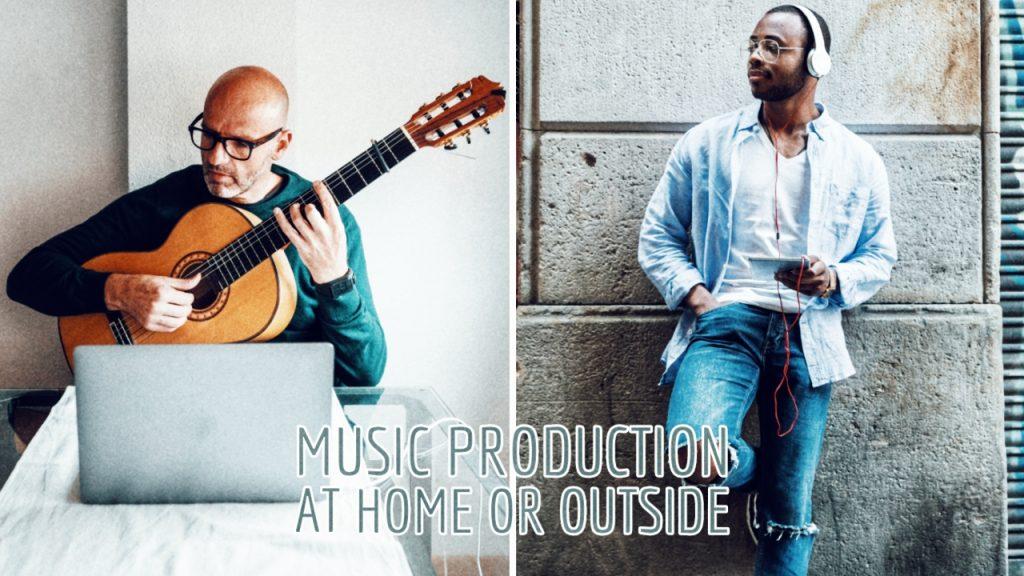
    Music production at home or outside

    I wonder if you ever encountered the dilemma I do, especially when good weather is coming: where to compose lo-fi music? The sun is shining more, less rain and somewhat it is just easier to walk outside then spending more time between the four walls. If you have this feeling as well, hit play button below and read this article further.

    Compose lo-fi music inside

    I guess it really starts with the best and most safe solution: let’s do that inside. You have your fave table with all the tools. The use of more instruments is more spontaneous and well… You can take breaks anytime, add your fave wine or booze to support your creativity. You are isolated, no disturbing noise in general.

    Furthermore you have the chance to record your sessions. You have your space to do whatever your want. So, only reading this long you could ask: the hell I am wasting your time with it? And this is where my dilemma starts. Even though it is too good, I feel like missing the inspiration in many times. I feel like having obstacles and lacking of musical inspiration in many cases. Not all the cases, I mean I composed 100+ beats at home. But the more I play lo-fi beats, the more I think about this topic.

    Even lo-fi girl is sitting inside

    Ignoring the fact that it is me sitting by the window with a fancy pen instead of the well-know lo-fi girl. It still remains a fact that somehow we imagine the cozy vinyl-vibe warm lo-fi beats by sitting inside with a warm mug of coffee. So why would the production take place outside?

    Compose lo-fi music outside

    What makes it very different to be outside is the stimulus. A city is vivid and lively. Cars are passing, dogs and other pets running in the parks. By the river bank you see ships and kayakers. You may enjoy your coffee or fave slice of cake by the table. In the mountains the scenery and the ambient peace to drive your motivation. Clouds slowly passing by. In short it is much easier to compose lo-fi music there. Or is it?

    Compose lo-fi music DAWless

    Lidly is a great example from Japan to prove, you can compose lo-fi music outside. The perfect place by the fence, sitting on concrete and here we go. This method of course requires a couple of gears. First, a DAWless mobile instrument with enough power to support your needs. I mean SP-404 is a trendy instrument to choose, but it has it’s costs. Also and this is important to highlight. You will need to prepare your deck before hand in order to have a performance like that. Second, you will need some extra gear to record it. And last but not least: there is a video of it. So an extra phone (maybe yours, 4K 60fps is getting more trendy nowadays) along with your mate to do it.

    See at the end, even though it is ultra motivating, it takes some preparation to achieve the perfect results.

    With regards to the instruments, PO-33 KO could be an alternative, as they are smaller, lighter. Though they come with some limitation compare to other (more pricey) instruments).

    On the other hand, I still say it worth doing so. Could be the same for beat production. You might not need fancy videos, but still need to pack your gear, take it with you. It is not easy to add your samples or change anything outside the DAW. Sure, you may download them with your mobile and record it. Or you could have an android phone with micro SD card (same for the instrument), so you can change the samples more easily. But it will be less smooth over doing things at home with the laptop next to you.

    Compose lo-fi music… with DAW?

    Why not? Nothing is impossible, said Taetro and:

    Ultra fancy right? In this case you have much more freedom compare to the DAWless one. I mean your laptop is right next to you to boost your chill-out session. It is offering you more variety but comes along with more hassle. Almost you would need a car by now. You are to take a laptop, a key or pad, some cables and the camera stuff either.

    And rolling back to the original thoughts: even if you do now with to record yourself. Unlike the DAWless setup, you still need a minimum full backpack of gear to compose music successfully. Not to mention that in case of an accident (sudden rain e.g.) your loss will be higher.

    Budget alternative

    Using your smartphone. It is in your pocket anyways, right? Sounds like the easiest way to compose lo-fi music outside. Also Koala Sampler for example let’s you record field (ambient, or city) noise to boost your beats.

    I released a longer article on music production with different tools featuring Koala Sampler as well here.

    The best part of this paragraph is that I have found 0 videos on people creating dope beats on Koala Sampler. And then I realised why: most people record their production videos with their smartphone. But Koala Sampler is the app on phone so most likely as a solo lo-fi beat producer, you cannot record yourself and produce beats the same time. Blimey, took me some time to realise it.

    Dilemma

    So here is my dilemma at last. Where is the best place to compose lo-fi music. Should I choose the ultra safe bedroom with comfy table and set? After all I can take a break any time. I can hear the beats and change the instruments on the go. Or rather going outside risking the gears but opening up to a more lively environment?

    At the end it is up to the person’s way of thinking and capabilities. But I believe after writing this article, I was able to sum up my thoughts a bit and well. Spend more time with gears outside. I will take the risk and hope to compose more lo-fi beats on the go.

  • What is Lo-fi Hip Hop?

    lo-fi hip hop

    In this article let’s deep dive in the sub-genres of lo-fi music starting with lo-fi hip hop. From the previous articles you may already know what is lo-fi all about. You are familiar with lo-fi music in general either. So here we go.

    Definition of Lo-fi Hip Hop

    According to Wiki: “Lofi hip hop (also known as chillhop and lofi beats to study to) is a form of downtempo that combines elements of hip hop, chill-out music, and lofi music.”

    I am not fully agreeing with it to be honest, but if you check the page linked above, not much of an extra to be found there. It states that lo-fi hip hop became popular in ’10 starting with the 24-hour radio stations on YouTube such as LoFi Girl (Chilled Cow before).

    Finally, the article finishes that it became widely popular in 2017 among YouTube streamers and the godfathers of the genre are J Dilla and Nujabes.

    About J Dilla and Nujabes

    At this stage Wiki is quite misleading but let me try to sort it out from you based on a few thoughts of my own.

    J Dilla was an underground hip hop artist and beat maker, who sadly died in early 2006 (vs becoming popular in 2017…). Furthermore, he was one of the pioneers of humanising machine music according several resources. On one side as he used Akai MPC samplers that offer more lo-fi-ish results we may indeed say he was producing lo-fi beats. But I do believe it was unintentional. He was not aiming to produce calming 85 bpm, almost vocalless beats, he was more experimenting the use of samplers to make them sound more human. Mixing it along with hip hop and performing with other artists throughout his career.

    Fun fact: look for the term “lo-fi” on his Wiki page. You will find nothing. Again, just saying.

    Nujabes could be more close to lo-fi hip hop I guess. I mean at least intentionally, though it would be lame mentioning that here Wiki authors were at least consequent and added “lo-fi hip hop” term to his page.

    Anyways let us leave that part behind. From timeline perspective it is still misleading to see that he sadly died in 2010, though lots of posthumous releases since suggests his growing fame. As for the break point in his career, to my point of view was the OST of Samurai Champloo. An edo period anime with vinyl vibe hip hop beats OST produced by Nujabes himself.

    Anime and Lo-fi Hip Hop

    I strongly believe that being a successful anime as well as the love of anime OST fans meeting with a mixed hip hop genre offered growth for the genre. I would further add and it is part of the legacy already: the director of the anime is Shinichiro Watanabe. Even if the name might not ring the bell immediately, but if I add that he is the guy behind Cowboy Bebop (both the anime and the live action series on Netflix), also known for Space Dandy and Blade Runner: Black Lotus – he should ring a bell.

    Now many fans to check previous works of a director and Cowboy Bebop anime is one of the most influential ones (even now available on Netflix). Therefore the views on Samurai Champloo is still growing. As a result more and more people to discover Nujabes as well.

    Fun fact again, that the use of anime along with lo-fi music therefore was present in 2004 already. Even though it become more popular in the ’10s after more influential anime such as Cowboy Bebop became available worldwide.

    Instruments used to produce Lo-fi Hip Hop

    I recently wrote a long article on how to produce lo-fi music in general offering different solutions let it be with DAW, DAW-less or simply using your phone. I do not wish to reopen the topic here, read more here.

    What I wish to cover here in the light of lo-fi hip hop is more the use of samplers in the genre. Samplers are digital instruments that records actual instruments (or music bits) and also able to chop them and play them back in a programmed order.

    It was trendy already in the ’90 but becoming widely used in the past 2 decades. Even though J Dilla was a fan of Akai MPC back then, in the past 15 years it is more Roland’s SP-404 to take the lead in front of any other samplers.

    Even though a sampler will never limit the genre, still if we cover lo-fi music and DAWless music production, we often end up at SP-404.

    Luckily enough Roland just released mark 2 version with tons of updated features but you may also lower costs at the beginning trying out Koala Sampler. A budget smartphone tool with similar workflow (clearly less possibilities, but 5 USD, hey!). I explain this in-depth here.

    Summing it up. Lo-fi Hip Hop is a mix of Hip Hop music but not necessarily featuring vocals and rap in the beats. It is heavily influenced by J Dilla showing the artist that beats not quantised 100% may sound more human. Nujabes on the other hand pointed us that the use of vinyl as samples and the right way of mixing offers a bit of warmth to the beats. That makes the listener more relaxed. No wonder many to use lo-fi music genres as background beats, study music or work music.

    Lo-fi Hip Hop and Chillhop

    One further topic remained at my end that is a bit weird to me. According to Wiki (link on top) the 2 genres are the same. To my point of view it is not. Luckily this page shares my view.

    In general chill music is originated from jazz, using many elements. Increased amount of piano play to be expected especially in the high pitched area (higher octaves). On the other hand lo-fi, coming from low fidelity degrades sound quality. The aim of lo-fi is to offer a bit of reminiscence, warm vibes and lower sound quality. Which is not going well with high pitched piano or crash. Also lo-fi music is working with lowered amount of bass (coming from the previously mentioned low fidelity) whereas some chillhop beats may use bass more casually.

    At the end the two sub-genres are close to each other. I guess many artists are not making a difference between them along with the tons of YouTube mixes. Still worth knowing that the origins and purpose of these sub-genres are different.

    Pages to check, artists to follow

    Thanks for reading my article. I hope I could offer you a bit of more in-depth bunch of words on my thoughts on the genre. I consider myself as a lo-fi artist but less a lo-fi hip hop artist. If you are interested in my music, I am happy if you check out Chilling Ermines or Stay Home. Both were inspired by the artists covered above.

    On the other hand the internet is full with great artists and places to read so here I go. This Reddit page is a great place to follow. I also keep following the guys, also reading what is up in the genre. The previously linked Tajima Hal is also a great fellow. An inspiring artist from Japan I am following for a while now. Eevee Beat from the Netherlands also offers you great amount of lo-fi hip hop on this Bandcamp page. Lastly, I would suggest you to check idealism’s page or simply surf on Bandcamp for the latest uploads.